
As part of planning for Petone to Grenada, we’re carrying out a series of ground and environmental investigations in Grenada, Newlands, Woodridge, Horokiwi and Petone.
These investigations help us understand soil, land and environmental conditions along the preferred route. This information is essential for progressing planning and design work and ensures the final road alignment is based on accurate data.
Nearby residents will be notified before any work begins in public areas, and traffic management will be in place for everyone’s safety.
Investigations include:
What you will see: You may notice field staff out and about taking samples, monitoring wildlife and carrying out environmental checks. Equipment such as lizard monitoring sheets and drill rigs may also be visible. This work is temporary and scheduled during the summer months to make the most of favourable weather conditions and minimise disruption. You may also notice temporary wooden or plastic track counters along reserve tracks. These devices count pedestrian and cyclist activity.
Public tracks: To keep everyone safe, some tracks will need to close temporarily while investigations are underway. Signs will be placed at the start of closed tracks and feeder tracks before work begins.
We’re carrying out ecological and environmental investigations to understand local ecosystems and gather essential data to help us design and plan how to build the new road. This includes:
Take care around any equipment and leave it in place for the safety of the public and our field teams.
We’re carrying out geotechnical drilling to learn more about the ground beneath the preferred route. These tests involve drilling boreholes, which help us understand ground conditions, soil and rock types, groundwater depths and the strength of soil and rock to guide planning and design for the new road.
From mid-January 2026, we will be conducting geotechnical drilling for ground investigations at Gilberd Bush Reserve. This involves drilling 8 boreholes and 8 window samplers at various investigation locations to understand the local ground conditions.
Window sampling, a reliable, low-impact way to check what is underground, will be used as it causes minimal disruption to the land.
To minimise drilling rig impacts, equipment will be delivered by helicopter and Arborists and Ecologist will be present during the works. The helicopter will use approved flight paths and will avoid flying over people and properties while carrying equipment.
For safety reasons, Te Ara Paparārangi Track will be closed from 26-27 January for vegetation clearing and trimming. Track signage will be in place, including at the start of relevant feedback tracks.
The map below shows the track that will be temporarily closed during the works (in red).
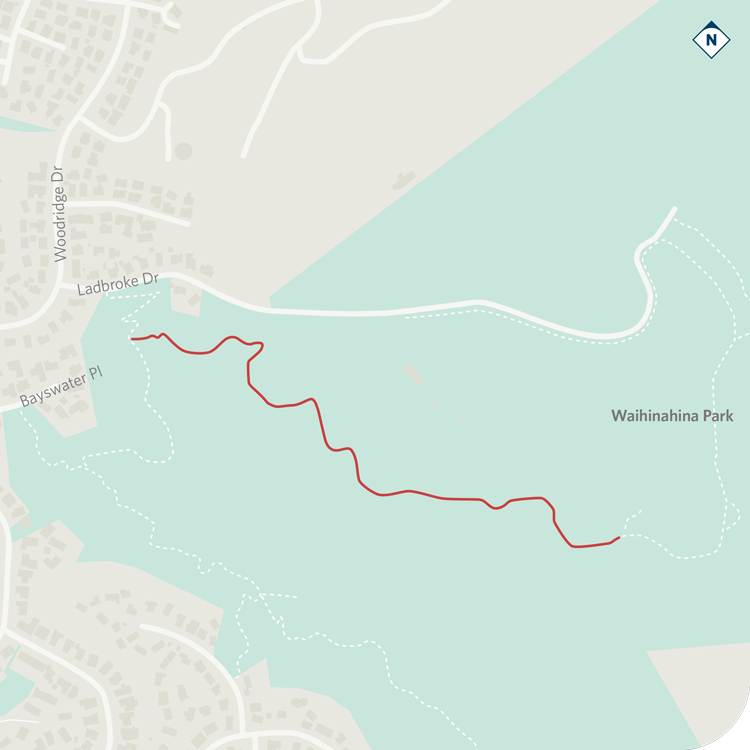
The track will close again for two weeks at the beginning of February.
Note that dates may change at short notice due to weather or other impacts on the schedule.
During these investigations, helicopter flights will take place from the grass area north of the carpark in Waihinahina Park.
To ensure safety, this area and part of the carpark will be cordoned off for approximately half a day per flight. Cones, barriers and signs will be in place around the helicopter take-off and landing area. Workers will check the surrounding area before and after each flight to ensure no members of the public are nearby. The parking area will only be closed during the helicopter operations.
Take care around the work area and follow all posted signs. Do not enter any closed or restricted areas. These measures are in place for your safety and the safety of our workers.
Noise may impact people or pets, with the helicopter hovering to unhook equipment. This can occur up to 5 minutes after reaching the investigation locations.
We know this work can be disruptive. We appreciate your cooperation, patience, and understanding as we work to ensure everybody is kept safe during these works.
Other drilling locations:
Over the next few months, you may notice temporary drilling rigs, fenced boreholes and monitoring equipment in these areas. Take care around any equipment and leave it in place for everyone’s safety.
Markers in public reserves, such as Seton Nossiter Park, Gilberd Bush Reserve and Mark Avenue Reserve, identify proposed locations for future ground investigations. Marking potential sites is common practice for planning with Wellington City Council.
Construction is not starting yet. The Petone to Grenada project is still in the early planning stages, which include design development, site investigations and preparing a referral application under the Fast-track Approvals Act.
If any trimming is required for safety reasons, it will be carefully managed and approved by the Wellington City Council. Any trimming will be undertaken in a manner that allows trees and plants to resprout and recover. We will take care to avoid and minimise disturbance to vegetation and wildlife as much as possible.
Drilling and sampling may create some noise during working hours (typically Monday to Saturday, 7:00 a.m. – 6:00 p.m.). We’ll do our best to minimise disruption and will avoid early mornings, evenings and weekends wherever possible.
Some investigations near roads may require temporary traffic management. Nearby residents will be notified before any work begins. Any road closures or detours will be clearly signposted and designed to minimise delays.
We’ll keep everyone updated as permits are approved and before investigations begin. Updates will be posted on our website and shared via our e-newsletter.
Sign up for our Petone to Grenada e-newsletter(external link)
Email us at petone2grenada@nzta.govt.nz
